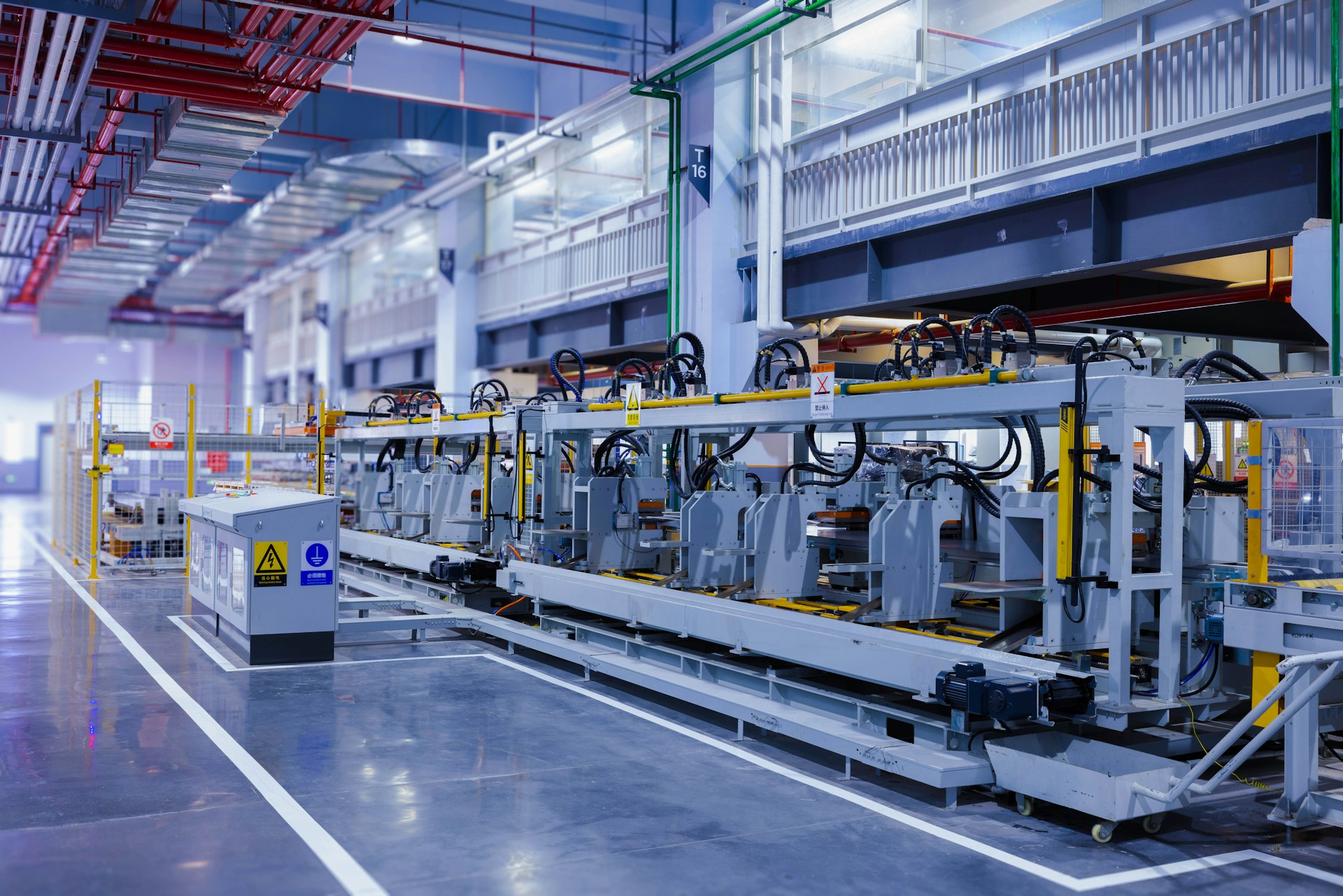
Packaging line automation

Packaging automation designed to increase output and reduce manual handling.

Client:

Goods Manufacturer

Client:

Goods Manufacturer

Client:

Goods Manufacturer

Focus:

Production Automation

Focus:

Production Automation

Focus:

Production Automation

Service:

Industrial prototyping

Service:

Industrial prototyping

Service:

Industrial prototyping

Date:

January 27, 2026
Date:

January 27, 2026

Date:

January 27, 2026

Production
Production

Project details

Overview

The Packaging Line Automation project focused on upgrading an existing packaging operation to increase throughput, consistency, and operational reliability. The client was experiencing growing order volumes while relying on labor-intensive packaging processes that limited speed and created quality variations.

The objective was to implement an automated packaging solution that could boost performance while integrating smoothly with upstream production systems.

Client challenges

Prior to automation, the packaging line faced several constraints affecting efficiency and output:

  • High reliance on manual packaging and handling

  • Inconsistent packaging quality and labeling accuracy

  • Frequent stoppages caused by manual changeovers

  • Limited line speed and throughput capacity

  • Difficulty adapting the line to new product formats

Objectives

The main goals of the project were to:

  • Increase packaging speed and overall line throughput

  • Reduce manual labor and operator dependency

  • Improve packaging consistency and quality control

  • Minimize downtime during changeovers

  • Create a flexible line capable of handling future product variations

Solution approach

A modular, automation-driven approach was selected to modernize the packaging line while maintaining production continuity. The solution combined automated machinery, smart controls, and integrated monitoring systems.

Key elements of the solution included:

  • Automated product feeding, packaging, and sealing systems

  • Integrated vision and quality inspection checkpoints

  • Synchronized conveyors and material handling equipment

  • Centralized control system for line coordination

  • Flexible tooling and settings for quick product changeovers

Implementation process

The project was executed through a structured, step-by-step process:

  • Assessment & Line Analysis
    Detailed evaluation of the existing packaging workflow, bottlenecks, and product requirements.

  • Automation Design
    Development of a tailored packaging line layout and control logic aligned with production targets.

  • Installation & Integration
    Deployment of automated equipment and integration with upstream and downstream systems.

  • Testing & Line Tuning
    Performance testing under real operating conditions, followed by speed and reliability optimization.

  • Operator Training & Handover
    Training sessions ensured operators could confidently manage, adjust, and maintain the new system.

Conclusion

The Packaging Line Automation project significantly improved packaging efficiency, consistency, and scalability. By replacing manual processes with a flexible, automated solution, the client achieved higher throughput, reduced operational strain, and a future-ready packaging line capable of adapting to evolving production needs.

Overview

The Packaging Line Automation project focused on upgrading an existing packaging operation to increase throughput, consistency, and operational reliability. The client was experiencing growing order volumes while relying on labor-intensive packaging processes that limited speed and created quality variations.

The objective was to implement an automated packaging solution that could boost performance while integrating smoothly with upstream production systems.

Client challenges

Prior to automation, the packaging line faced several constraints affecting efficiency and output:

  • High reliance on manual packaging and handling

  • Inconsistent packaging quality and labeling accuracy

  • Frequent stoppages caused by manual changeovers

  • Limited line speed and throughput capacity

  • Difficulty adapting the line to new product formats

Objectives

The main goals of the project were to:

  • Increase packaging speed and overall line throughput

  • Reduce manual labor and operator dependency

  • Improve packaging consistency and quality control

  • Minimize downtime during changeovers

  • Create a flexible line capable of handling future product variations

Solution approach

A modular, automation-driven approach was selected to modernize the packaging line while maintaining production continuity. The solution combined automated machinery, smart controls, and integrated monitoring systems.

Key elements of the solution included:

  • Automated product feeding, packaging, and sealing systems

  • Integrated vision and quality inspection checkpoints

  • Synchronized conveyors and material handling equipment

  • Centralized control system for line coordination

  • Flexible tooling and settings for quick product changeovers

Implementation process

The project was executed through a structured, step-by-step process:

  • Assessment & Line Analysis
    Detailed evaluation of the existing packaging workflow, bottlenecks, and product requirements.

  • Automation Design
    Development of a tailored packaging line layout and control logic aligned with production targets.

  • Installation & Integration
    Deployment of automated equipment and integration with upstream and downstream systems.

  • Testing & Line Tuning
    Performance testing under real operating conditions, followed by speed and reliability optimization.

  • Operator Training & Handover
    Training sessions ensured operators could confidently manage, adjust, and maintain the new system.

Conclusion

The Packaging Line Automation project significantly improved packaging efficiency, consistency, and scalability. By replacing manual processes with a flexible, automated solution, the client achieved higher throughput, reduced operational strain, and a future-ready packaging line capable of adapting to evolving production needs.

Review

Client

Jack Hart

Operations Director

“Their automation upgrade cut our manual workload by nearly half.”

"Through the integration of conveyor controls and adaptive robotics, we effectively minimized repetitive tasks and reduced human error. This change improved process consistency and allowed our team to focus on more valuable operations."

27%

Reduction in overall energy consumption within the first quarter

Client

Jack Hart

Operations Director

“Their automation upgrade cut our manual workload by nearly half.”

"Through the integration of conveyor controls and adaptive robotics, we effectively minimized repetitive tasks and reduced human error. This change improved process consistency and allowed our team to focus on more valuable operations."

27%

Reduction in overall energy consumption within the first quarter

Client

Jack Hart

Operations Director

“Their automation upgrade cut our manual workload by nearly half.”

"Through the integration of conveyor controls and adaptive robotics, we effectively minimized repetitive tasks and reduced human error. This change improved process consistency and allowed our team to focus on more valuable operations."

27%

Reduction in overall energy consumption within the first quarter

Contact us

Let’s build your next solution today.

Whether you’re optimizing existing systems or designing something new, our team delivers reliable future-ready solutions.

Man

Contact us

Let’s build your next solution today.

Whether you’re optimizing existing systems or designing something new, our team delivers reliable future-ready solutions.

Man

Contact us

Let’s build your next solution today.

Whether you’re optimizing existing systems or designing something new, our team delivers reliable future-ready solutions.

Man

Create a free website with Framer, the website builder loved by startups, designers and agencies.