Optimizing production lines with industrial automation
Key strategies for improving efficiency, consistency, and output through modern automation systems.

Overview
Production lines are the backbone of manufacturing performance. As demand increases and product lifecycles shorten, traditional manual or semi-automated lines often struggle to keep pace. Industrial automation enables manufacturers to optimize production lines by increasing speed, improving consistency, and reducing operational risk—without sacrificing quality.
Challenges in traditional production lines
Many production lines evolve over time, resulting in fragmented workflows, uneven workloads, and limited visibility. Common challenges include:
Bottlenecks caused by manual handoffs or imbalanced stations
Inconsistent output quality due to human variability
Limited flexibility when adapting to new products or volumes
Higher downtime from reactive maintenance and equipment failures
The role of industrial automation
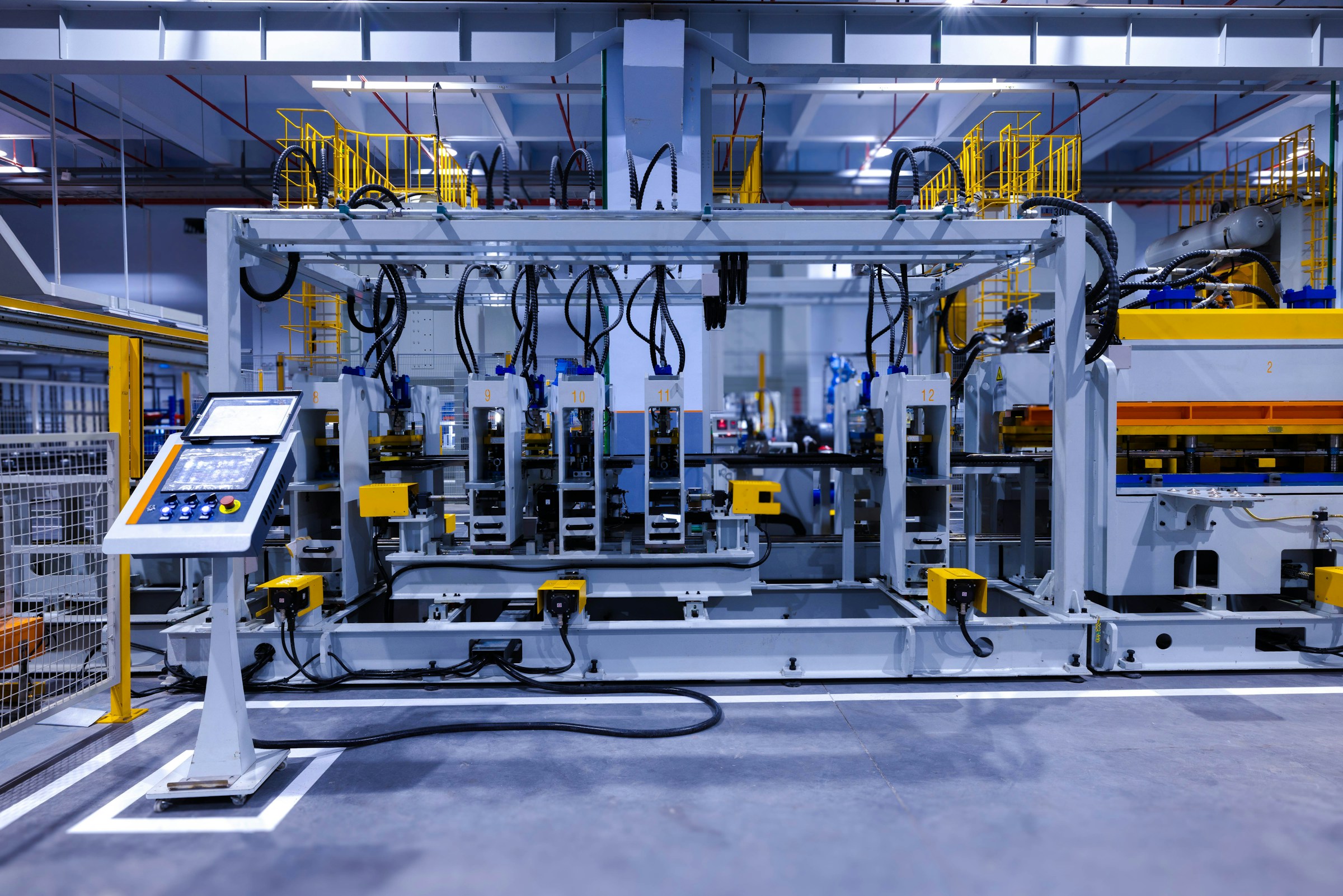
Industrial automation transforms production lines by standardizing processes and synchronizing operations. Automated systems ensure tasks are executed the same way every cycle, creating predictable and repeatable outcomes.
Automated workstations to balance line performance
Robotics for high-speed, high-precision operations
Conveyor and material handling systems for smooth flow
PLC and control systems to coordinate equipment in real time
Data-driven line optimization
Modern automated production lines generate valuable operational data. When properly integrated, this data provides insights that help manufacturers continuously refine performance.
Real-time monitoring allows teams to identify slowdowns, detect deviations, and respond before issues escalate. Historical data supports line balancing, capacity planning, and process improvements that drive long-term gains rather than temporary fixes.
Building scalable production lines
Optimizing production lines with industrial automation is not just about today’s output. Scalable automation allows manufacturers to expand capacity, introduce new products, and adapt to market changes with minimal disruption.
By combining automation technologies, data visibility, and skilled personnel, manufacturers can build production lines that are faster, more reliable, and ready for future growth.
Overview
Production lines are the backbone of manufacturing performance. As demand increases and product lifecycles shorten, traditional manual or semi-automated lines often struggle to keep pace. Industrial automation enables manufacturers to optimize production lines by increasing speed, improving consistency, and reducing operational risk—without sacrificing quality.
Challenges in traditional production lines
Many production lines evolve over time, resulting in fragmented workflows, uneven workloads, and limited visibility. Common challenges include:
Bottlenecks caused by manual handoffs or imbalanced stations
Inconsistent output quality due to human variability
Limited flexibility when adapting to new products or volumes
Higher downtime from reactive maintenance and equipment failures
The role of industrial automation
Industrial automation transforms production lines by standardizing processes and synchronizing operations. Automated systems ensure tasks are executed the same way every cycle, creating predictable and repeatable outcomes.
Automated workstations to balance line performance
Robotics for high-speed, high-precision operations
Conveyor and material handling systems for smooth flow
PLC and control systems to coordinate equipment in real time
Data-driven line optimization
Modern automated production lines generate valuable operational data. When properly integrated, this data provides insights that help manufacturers continuously refine performance.
Real-time monitoring allows teams to identify slowdowns, detect deviations, and respond before issues escalate. Historical data supports line balancing, capacity planning, and process improvements that drive long-term gains rather than temporary fixes.
Building scalable production lines
Optimizing production lines with industrial automation is not just about today’s output. Scalable automation allows manufacturers to expand capacity, introduce new products, and adapt to market changes with minimal disruption.
By combining automation technologies, data visibility, and skilled personnel, manufacturers can build production lines that are faster, more reliable, and ready for future growth.
Jan 26, 2026
Proven methods to boost workflow efficiency, streamline coordination, and remove bottlenecks in settings.
Jan 26, 2026
Proven methods to boost workflow efficiency, streamline coordination, and remove bottlenecks in settings.
Jan 27, 2026
A practical guide to introducing automation into existing industrial environments without disrupting operations.
Jan 27, 2026
A practical guide to introducing automation into existing industrial environments without disrupting operations.
Jan 28, 2026
The role of meticulous planning and precise technical execution in enhancing performance ensuring safety.
Jan 28, 2026
The role of meticulous planning and precise technical execution in enhancing performance ensuring safety.
Jan 26, 2026
Proven methods to boost workflow efficiency, streamline coordination, and remove bottlenecks in settings.
Jan 27, 2026
A practical guide to introducing automation into existing industrial environments without disrupting operations.
Contact us
Let’s build your next solution today.
Whether you’re optimizing existing systems or designing something new, our team delivers reliable future-ready solutions.

Contact us
Let’s build your next solution today.
Whether you’re optimizing existing systems or designing something new, our team delivers reliable future-ready solutions.

Contact us
Let’s build your next solution today.
Whether you’re optimizing existing systems or designing something new, our team delivers reliable future-ready solutions.